


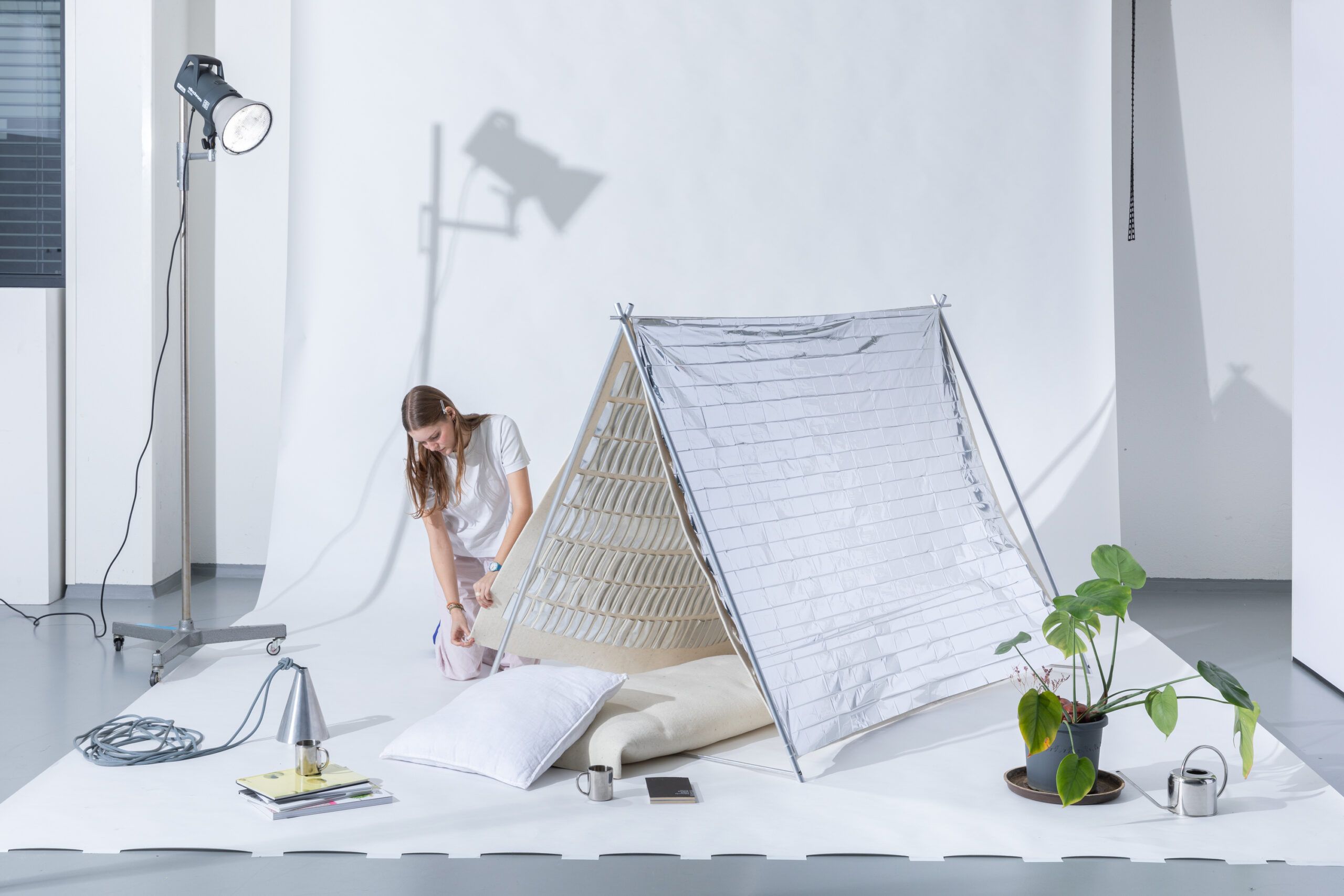
 Living in Geneva in 2100 - MAIA, Studio Philippe Rahm / 2024 © HEAD – Genève
MAIA – Master of Arts in Interior Architecture
Interior Ecologies
The Master of Arts in Interior Architecture (MAIA) is a full-time, two-year graduate program that explores interior architecture at the intersection of space, ecology, and media. Space design is viewed as multidimensional, articulating the diversity of interiors, environments, and multispecies that configure reality along various paths and scales, from material to virtual, and from local to global.
MAIA addresses both the responses to contemporary environmental and societal challenges (circular economy, carbon footprint, biodiversity loss) and the implications of new ecological paradigms (post-natural, post-human, more-than-human) for interior architecture as a discipline in all its professional dimensions—space design, product design, new media, research, and curatorial practices. The professional dimension of the program includes full-scale project realizations and multidisciplinary training that explore new interior ecologies.
MAIA: Curriculum
The program is structured in 4 semesters:
MAIA 1 – Glossaries: Sustainable, Post-human Interiors
MAIA 1 explores the glossaries that characterize contemporary ecology and their implications for interior architecture. From the postmodern concept of sustainability in the 1980s to that of the Anthropocene in the 2000s, and from the contemporary paradigms of the Post-human to the Post-natural and the Cthulucene in the 2010s, the semester is structured around different modules that investigate the themes of Natural History, Plural Bodies, Animals, and Plants in interior spaces.
MAIA 2 – Assemblages: Technology, Objects, Mediated Interiors
MAIA 2 focuses on the assemblages among objects, technologies, and media within interior environments. Considering any form of material and virtual ecology as architectural—from material prototypes to generative AI—the semester is practice-based and structured around a core studio, with specific modules on Circularity, Building Components, and Digital Media.
MAIA 3 – Investigations: Design, Research, Multiscalar Interiors
MAIA 3 investigates research-driven practices of design, examining how interior spaces construct multiscalar ecologies from within. The semester combines theory and design to address urgent challenges such as post-natural ecologies, biodiversity loss, and design politics. It integrates a core studio with dedicated modules on Curatorial Practices and the Written Thesis, guiding students through a non-linear process to establish their intellectual discourse and graduation pathways.
MAIA 4 – Diploma: Professional Competences
The final semester of MAIA is centered on each student’s graduation project. A core studio shapes the semester, complemented by core-skills seminars on professional competencies that will help prepare students for post-graduate life. Never before in history has interior architecture produced so many spaces where the human and the non-human come together in new configurations, calling for new ecosystemic action.
* The language of the MAIA program is English, with some lectures conducted in French.
 2084: A Diorama of the Future - MAIA, Studio Youri Kravtchenko / Milan Design Week, 2024 © HEAD – Genève, Raphaëlle Mueller
Interior Architecture operates nowadays at the intersection between physical and mediated spaces, such as those of mass communications, digital platforms, or visual arts. Considering any form of representation as architectural—from photography to video games, from cinema to generative AI—MAIA explores interior spaces as platforms of ‘expanded media,’ examining their belonging to different places and temporalities, whether physical or virtual, close or distant, ultimately reasserting the role of interior architecture in the construction of contemporaneity.
MAIA: Professional Projects
MAIA students regularly engage in professional projects in collaboration with cultural institutions and economic partners. This hands-on approach allows students to gain practical experience in real projects, preparing them for the conceptual, technical, and administrative aspects inherent in professional practice. Students also have the opportunity to collaborate with and be showcased in international exhibitions, including events and partners such as the Milan Design Week or the Vitra Design Museum. MAIA enables its graduates to apply for registration on the Professional Register of Swiss Architects (REG A, Interior Architecture).
* Explore the latest projects from the Interior Architecture Department on Divisare.
MAIA: Research Partners
MAIA students collaborate on ongoing research projects with academic partners, such as Scènes de Nuit—a research platform investigating the entanglements between night and architecture—and The Future of Humanitarian Design—a research project focused on humanitarian policy and architecture developed in collaboration with the Geneva Graduate Institute and the University of Copenhagen. The MAIA program includes a permanent cooperation with the Joint Master of Architecture (JMA) of the schools of Geneva, Fribourg, and Burgdorf, as well as with the École Camondo in Paris and Toulon. Research is envisioned as central to shaping new professional opportunities, including design, curatorial, and editorial practices, leading to a professional international career.
 Interior Ecologies - MAIA Graduate Show, Studio Leonid Slonimskiy / Geneva, 2023 © HEAD – Genève, Guillaume Collignon
MAIA: International Community, HEAD – Genève
MAIA students engage in learning within an international community that includes interior designers, architects, curators, researchers, and experts from diverse disciplines. The program benefits from the ecosystem at HEAD – Genève, where it regularly collaborates with other departments such as cinema, fashion, or media design, aiming to redefine the profession of Interior Architecture as a multidisciplinary practice in the 21st century.
Lecturers and speakers include:
Dr Javier Fernández Contreras. Head of Department
Valentina De Luigi. Deputy Head
Dr Philippe Rahm, Principal at Philippe Rahm Architectes. Paris
Leonid Slonimskiy, Principal at KOSMOS Architects. Moscow, Zurich
BUREAU (Daniel Zamarbide, Carine Pimenta, Galliane Zamarbide). Lisbon, Geneva
Simon Husslein, Principal at Atelier Husslein. Zurich
Alejandro Muiño. Principal at TAKK. Barcelona
Studio Ossidiana (Giovanni Bellotti, Alessandra Covini). Amsterdam
Apropå (Manon Portera, Valentine Maeder). Geneva
Paule Perron, Principal at ducks architects. Geneva
Jolanthe Kugler, Curator at mudac. Lausanne
Marine de Dardel. Architect and Researcher. Geneva
Dr Aida Redón Navarro. Architect and Level Designer. Madrid
Damien Greder, Principal at Typical Office. Principal at Hypothesis Atelier. Geneva
Valentin Calame. Teaching Assistant
David Viladomiu Ceballos. Teaching Assistant
Chiara Pezzetta. Teaching Assistant
Manuel Rossi. Teaching Assistant
Bryan Jefferson Reyes, Teaching and Department Assistant
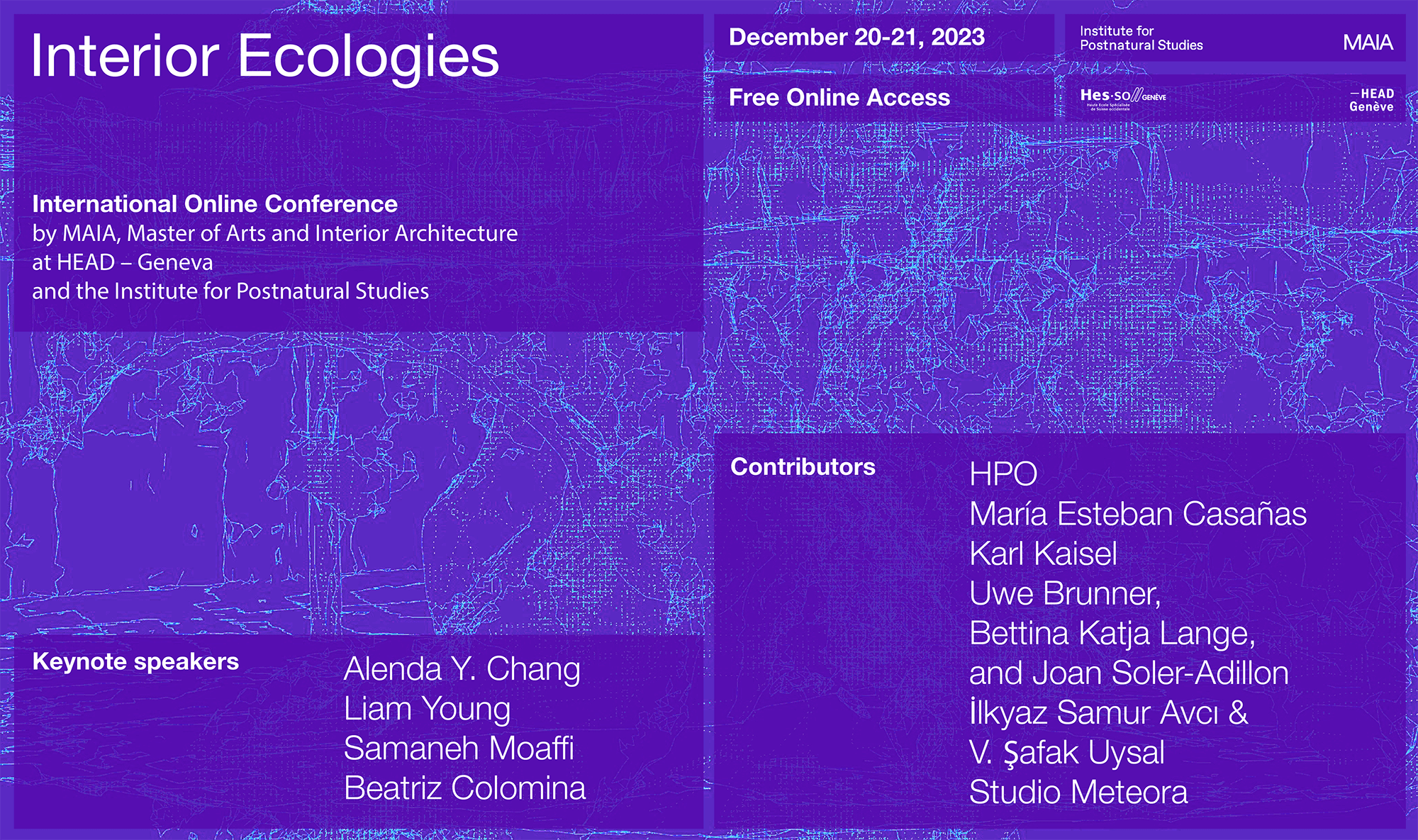 Interior Ecologies. International Online Conference. December 20-21, 2023
