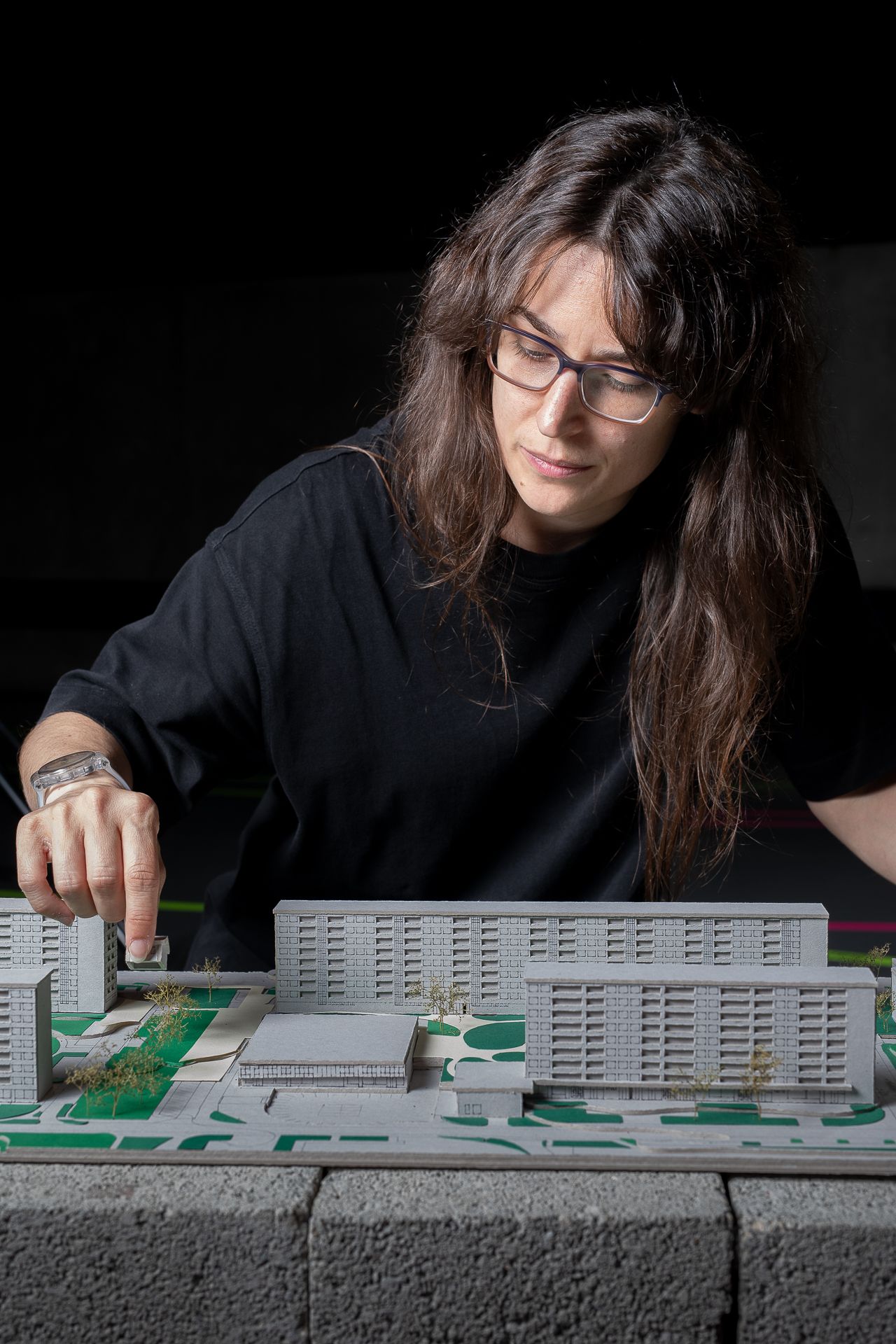
Sandy Pitetti is a Swiss freelance illustrator and graphic designer from Geneva.
She explores complementary fields—visual creation, illustration, and a sensitive relationship with space—particularly through in situ visits, always with a pencil in hand. She has engaged with these disciplines in various projects at HEAD – Genève, as well as in seminars and workshops for the JMA – Joint Master of Architecture. She is especially interested in the development of public space projects that respond to the needs of citizens/inhabitants and encourage interaction between people and their environment.
The subject of her thesis, Can Play in the City Create Versatility of Use?, questions the place given to children in urban settings, as well as how play and the appropriation of public space can foster intergenerational relationships.
With a Bachelor’s degree in Visual Communication from HEAD – Genève (2015) and over nine years of experience as a freelance graphic designer and illustrator, Sandy chose to pursue a second course of study by enrolling in the Master of Arts in Interior Architecture at HEAD – Genève. What particularly interests her about this Master’s program is its openness to multiple disciplines, including interior design, urban planning, landscape architecture, the role of the human being, and the diverse living species around us, along with the related environmental challenges.
She also completed an internship at Urbaplan, driven by her strong interest in territorial issues. This experience allowed her to explore the subject at multiple scales, including the creation of a masterplan and the facilitation of participatory walks. In addition, she has collaborated with the URBZ collective, which specializes in participatory urbanism, design, and governance.
Through her design thinking, she aims to develop sustainable projects that consider the interconnection between all living species and the environments in which they evolve—especially within public space. Since public space reflects daily life and embodies societal values, fulfilling many functions, it is far more than a simple urban configuration: it is a deeply social realm, a place for encounter, exchange, and expression. It is a topic she hopes to explore further throughout her professional career.
Diploma Project
Common-play-ground
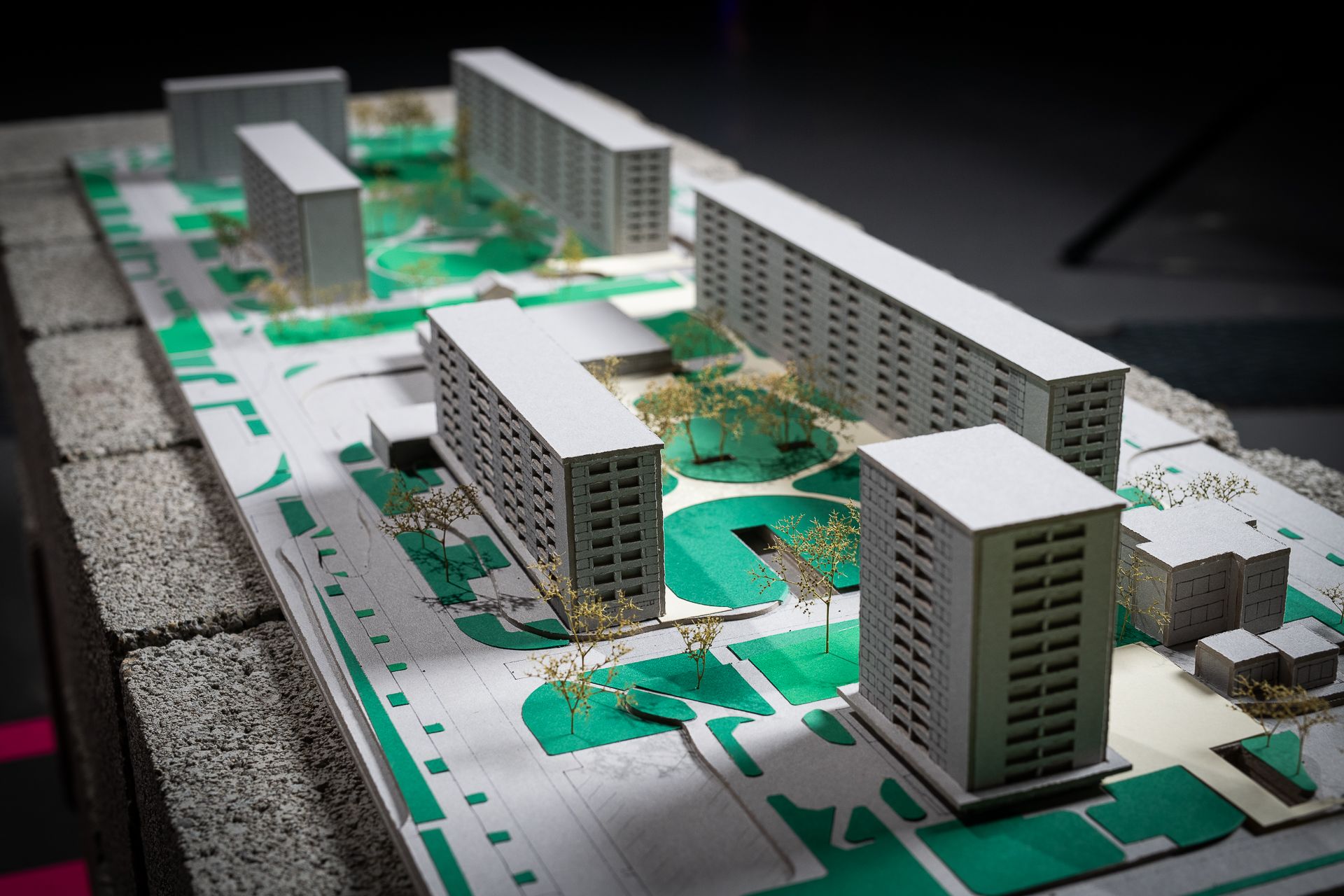
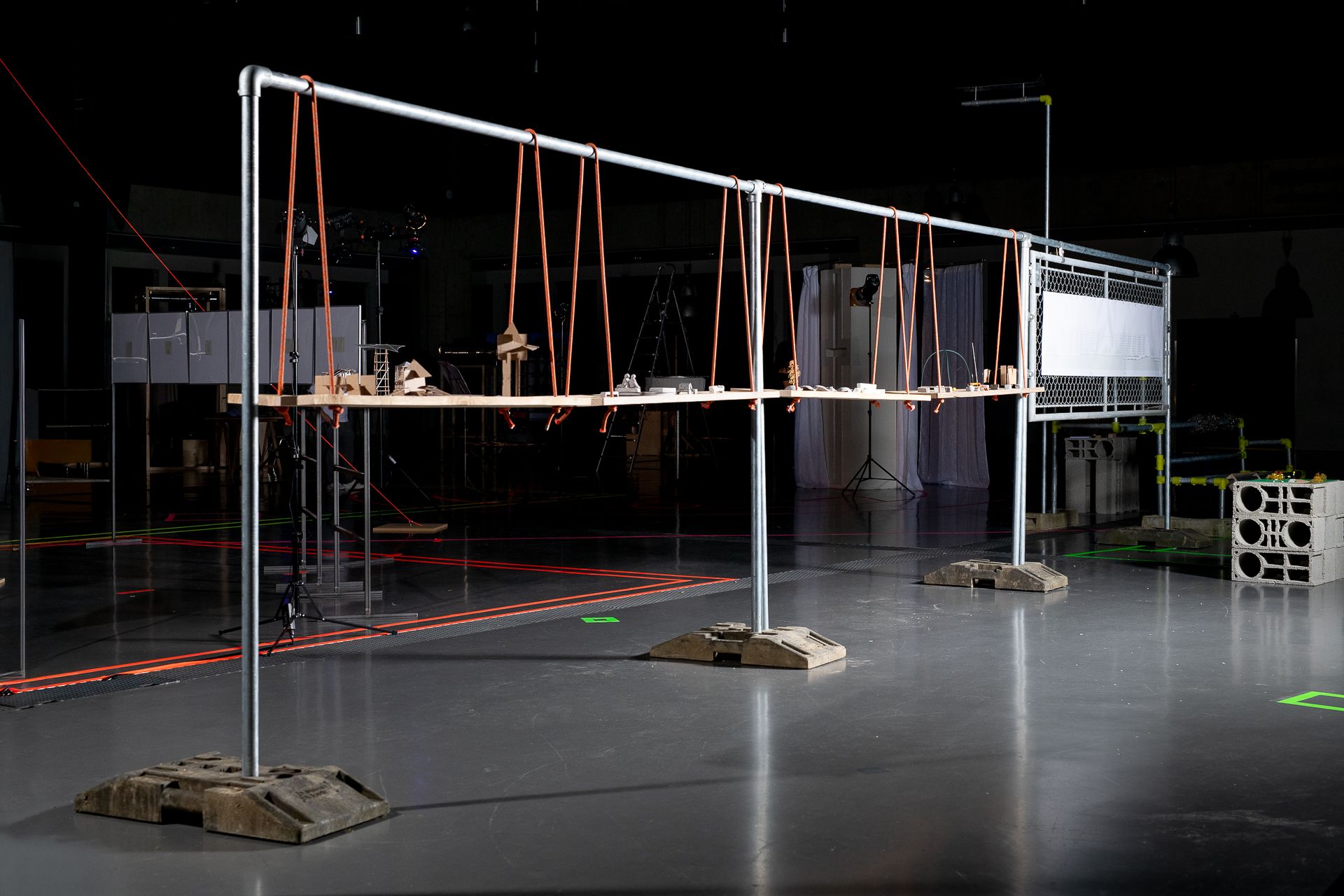
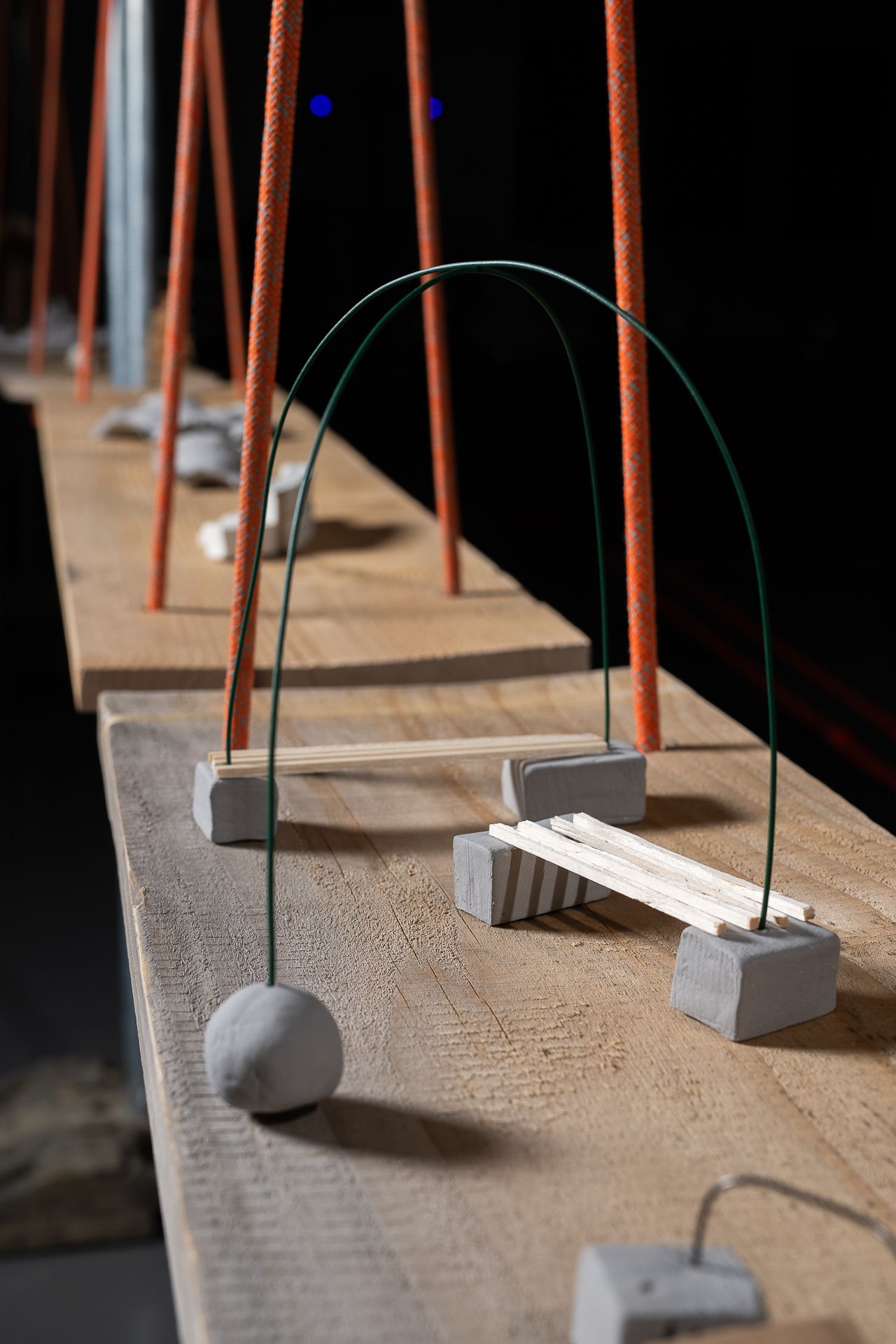
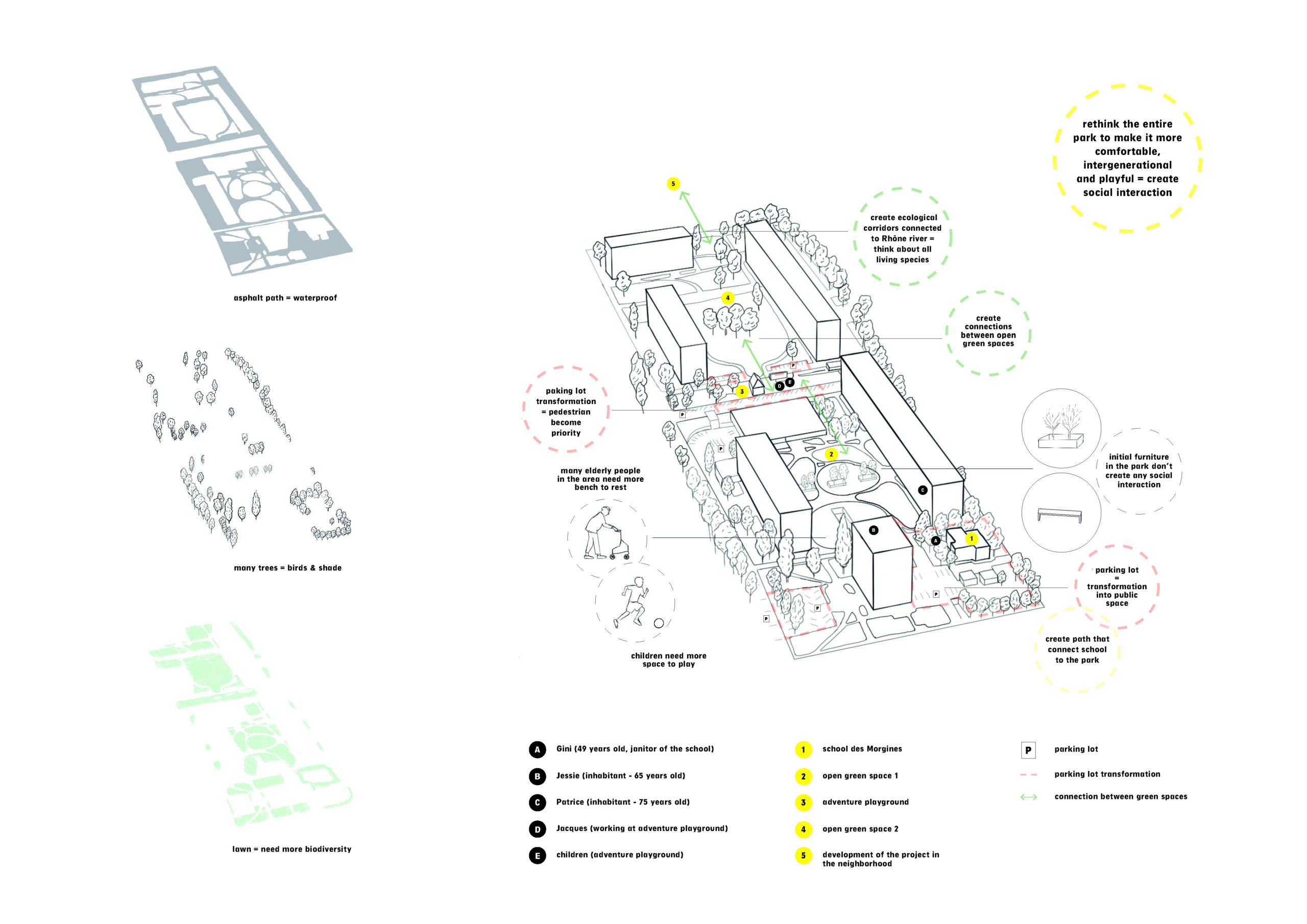
This project envisions an intergenerational park built primarily from underused on-site materials, reclaimed as valuable resources. Following the thesis Can Play in the City Serve Multiple Purposes?, the project begins with a site whose playground appears abandoned.
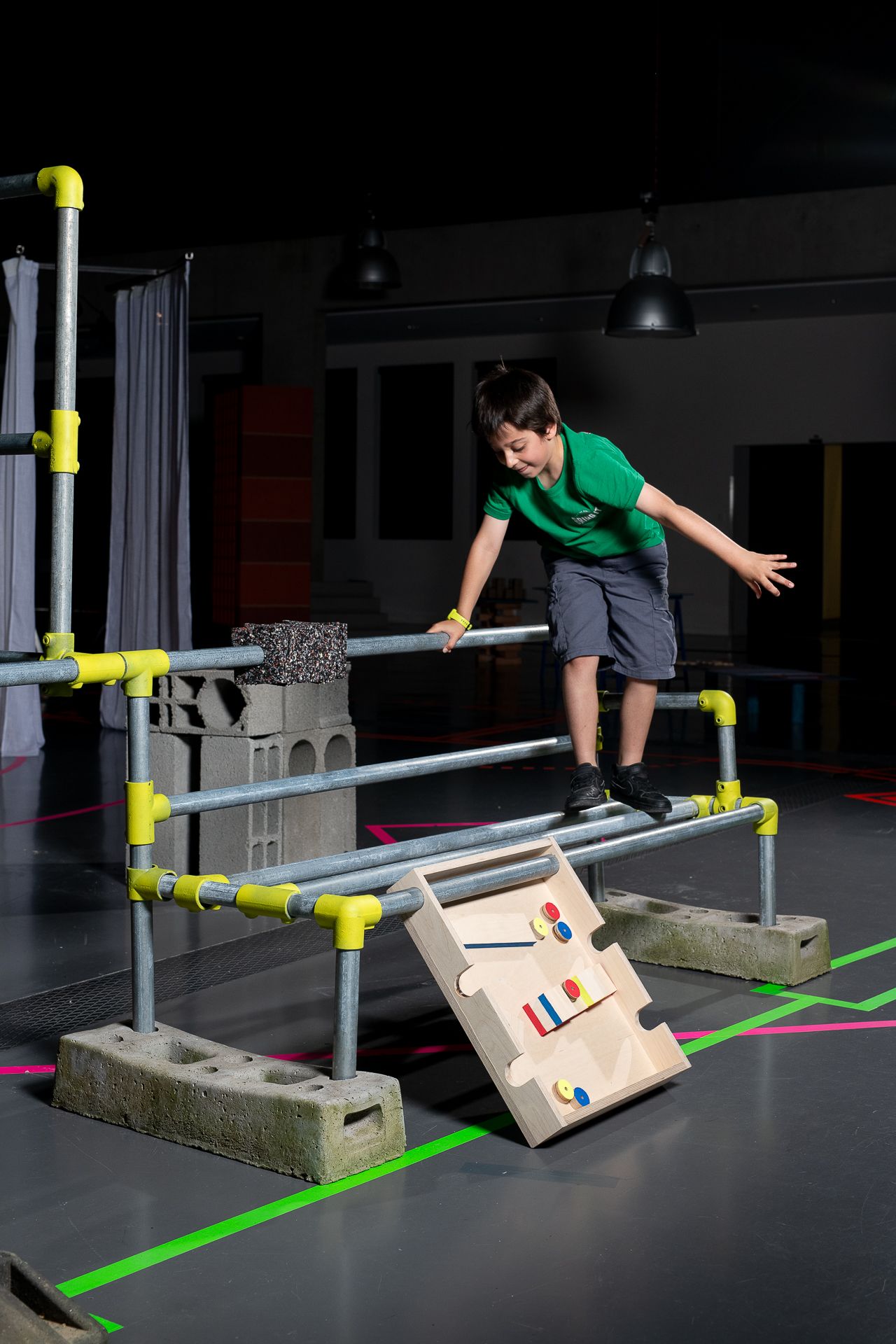
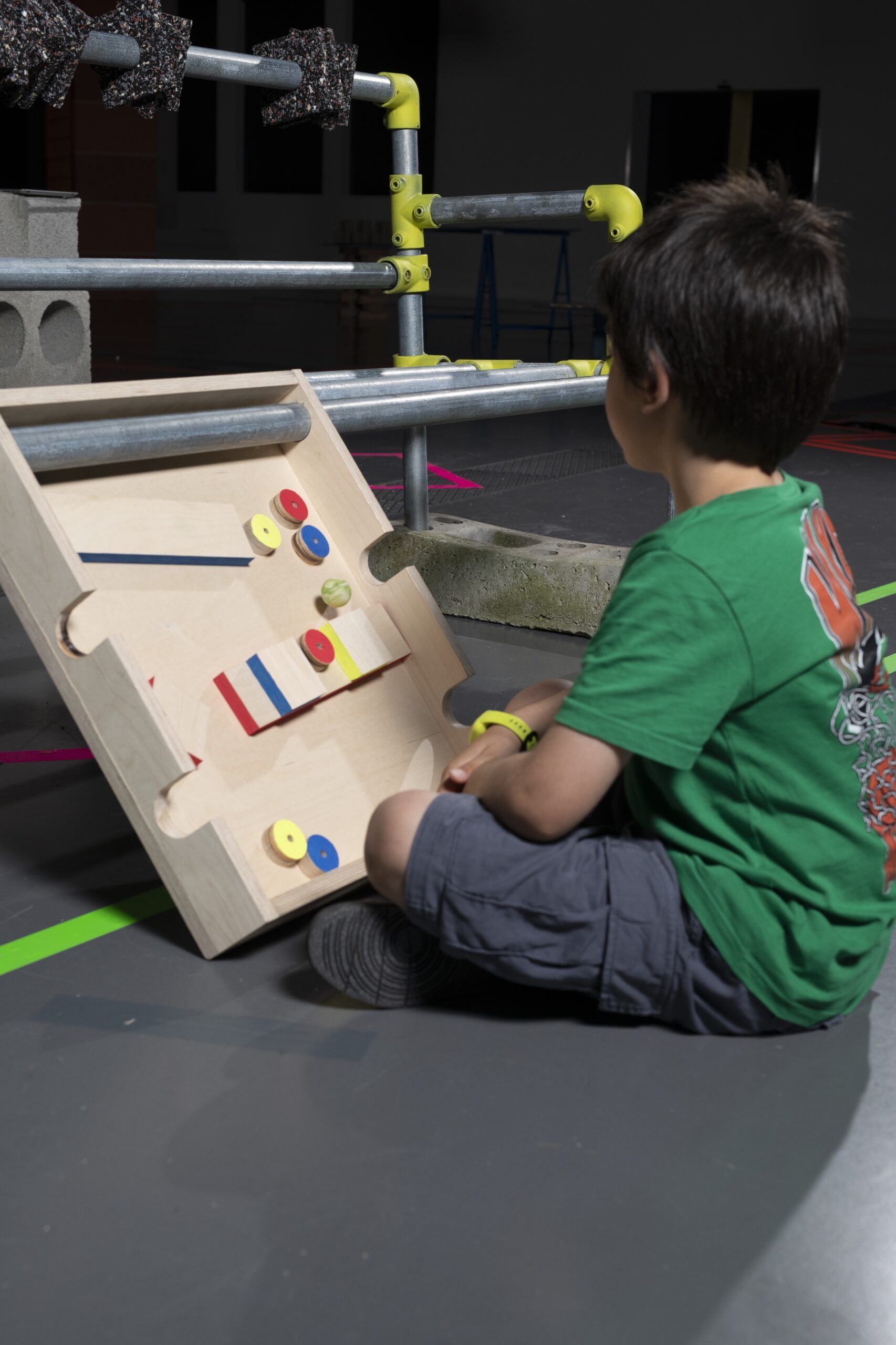
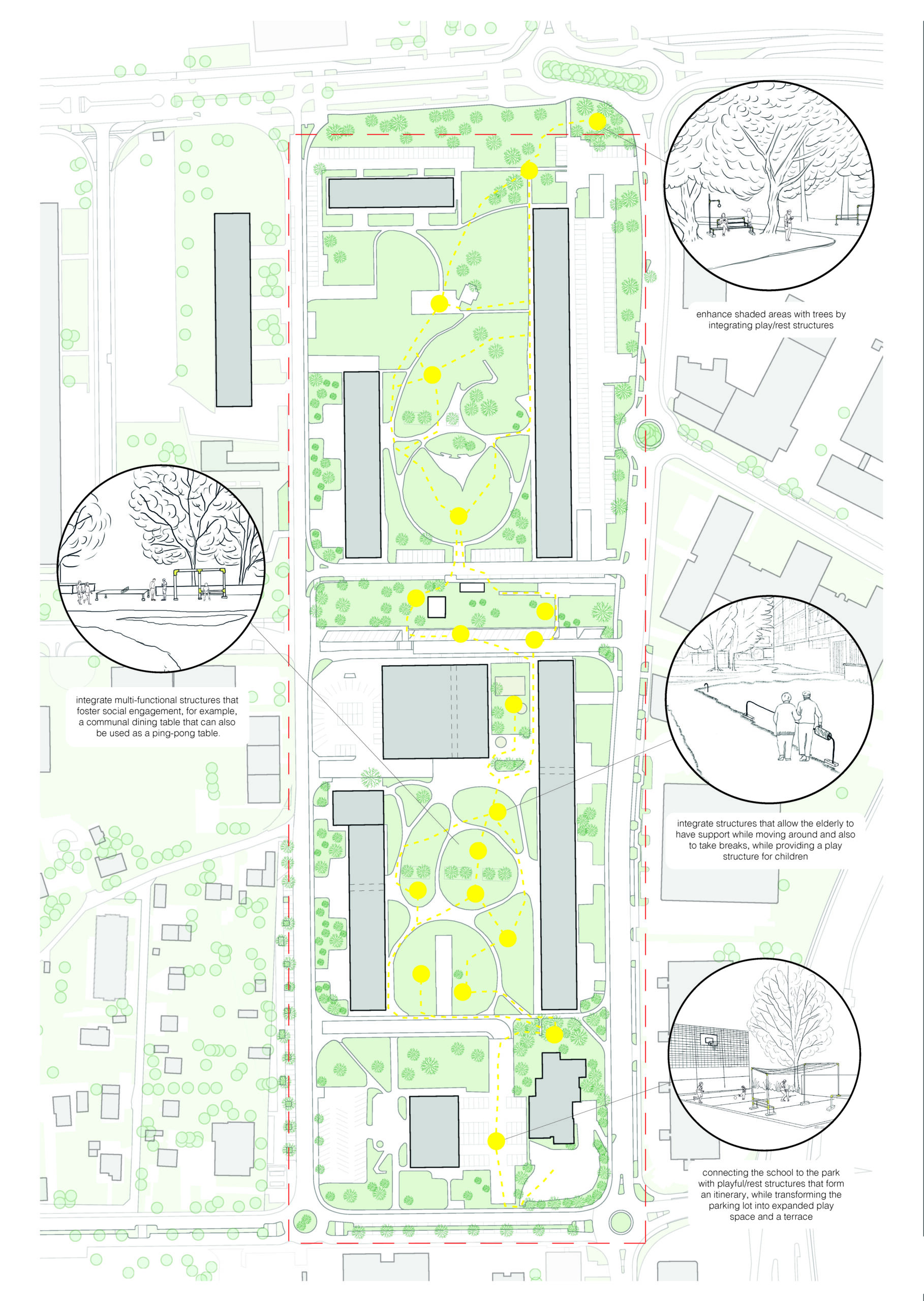
Fences that once divided by activity, age, or safety concerns are transformed into connecting elements, encouraging interaction among park users—particularly children and the elderly. Here, play is not confined to a designated area but reimagined as a dispersed and evolving system embedded in the city’s fabric.
To prioritize people over cars, underused parking lots are transformed into new play and rest areas, placing pedestrians at the heart of the project.
By incorporating playful elements throughout pathways, seating, and the broader landscape, the design promotes continuous movement and social interaction. The park fosters a sense of community ownership and inclusivity through its flexible, low-impact urban strategy.